How about this weather we are having? It seems this phrase is becoming more common all of the time. Global weirding perhaps but our weather patterns seem to be more and more to the extremes. A pre-spawn walleye bite should be as predictable as tax time or the return of the Robins. The past few seasons we have seen a swing from one of the earliest ice outs in recorded history to what is shaping up to be one of the latest. This river thing can be hard to time lately
but if you hit it right it can be fantastic. The big sallies are just starting to run up on the Rainy river as I type this and the season is scheduled to close tomorrow. Missed it by that much. So we didn't get our 30inchers this year but it's great to get out and give it a go. One month 'till 2013 opener now, if we have open water...
Muskie fishing can get out of hand in a hurry. At times, you can cast every lure in your possession to known fish holding structures and come up empty. Other days that one lure stands out above all else and you would swear it's the only thing to catch a fish on. Often this leads us to purchasing a second or third color or variation of this lure for our next outing. Multiply this pattern times ten in a typical Muskie season and you can end up with boxes and boxes full of mostly unused lures. I decided it's time to simplify. Here is a list of my six most productive casting lures from the past few seasons.
1) Musky Innovations Mag. Bulldawg
I resisted using these big, heavy, ugly lures for years just because I don't like to follow trends. However, the sheer monster catching ability of these lures is simply unmatched and a big Muskie will hammer these things when she wont even give most lures a look.
2) Musky Mayhem Double Cowgirl
Speaking of trends, these really are the work horses of today's Muskie hunter. The big double blades fish "bigger" then any other lure in your tackle box. The vibration emitted from these lures takes full advantage of the fish's perfectly evolved lateral line system. I like the JR Double model and tend to prefer gold, green, orange and chartreuse combos.
3) Suick
The classic Jerkbait that has been around since the 1930's is still a great producer today. I like to work them around emerging weeds in June and early July and again in October and November or anytime over rock structure.
4) Mag Bomber Long-A
This is the dark horse on my list. Most Muskie people would consider this more of a Pike lure but this is my all time producer for early season or pressured fish. I work these with a quick series of snaps from the rod tip, the more erratic the better. These little baits will zing from side to side, up and down. The real key is to throw slack into your line between twitches like you are trying to snap your line.
5) ERC Hellhound
ERC has mastered the subsurface walk-the-dawg with these baits. You can work the Hellhound with a fast or slow retrieve and since it stays a shallow 0'-3' below the surface it is great over shallow rocks or thick weedbeds.
6) Tie: Top Raider and Flashy Serial Killer
This large spinnerbait is perfect for when you need to grind a lure through weeds where the fish live. This is a great way to get a reaction strike when weed fish get pressured. This is also the best spinnerbait I have seen for fluttering down a drop-off.
If I force myself to include a topwater then I choose the Top Raider. There are a lot of good tail rotating lures out there but the Top Raider gets my vote because of it's rock solid construction.
I headed 15 miles offshore with my dad on Tuesday and set up on some numbers in 65' to try for whatever was biting. The first spot produced the usual short Red Grouper, Porgies and Grunts. We also had encounters with the usual oddities such as Flounder, Lizard fish, Sand Perch and Puffers. Cut frozen squid and sardines put some fish on ice for us. I hooked one mammoth fish that broke my 30# leader so it was time to step up the tackle. I had some numbers from last year where we caught a few Gag Grouper while drifting so we headed that way to see who was home and maybe get some Snapper or Amberjack for the box or C&R some Groupers. I got us anchored just uptide from the numbers, put out a chum bag and started chumming pretty heavy with some old freezer burnt bait that had been sitting in an old freezer since last winter, pew! I upped our leaders on our bottom rigs to 60# florocarbon and we sent down some bait. With nothing going right away I threw a live shrimp out in the chum slick on a lighter rig with no weight and set it in the rod holder. Within minutes that rod was bent over and the drag was screaming with dozens of yards of 15# power pro peeling off. A couple of broken lines later we smartened up and put out two live shrimp on 3/0 circle hooks with 60# leaders, put them in the chum stream un-weighted and finally boated one of these mean beasts.
These fish are tough hombres and even though we were hooking fish 20' down over 65 f.o.w. it took 30# class rods with 60# leaders to keep from being broken off on the bottom.
Every time I threw out a big blast of chum it was followed up by a fish or two on the line.
Here is my dad holding up our first double.
Stopped to take a picture of another nice fish (30") and...A broken rod!
Both fish landed...technically, another double right?
We capped it all off with this 32" mule that pulled off dozens of yards of 40# power pro like nothing doing several times, we even had to pull our anchor to land this one. Wow, they are tough!
At this point we decided to leave this spot alone and hopefully come back sometime when the Grouper harvest season is open. I'll be dreaming of chumming this little ledge again in the months ahead, not to mention Grouper sandwiches... but the Grunts and Porgies tasted okay too.
I caught 18 species of fish in a week inshore and offshore combined, not too shaby but for now it's time to put the rods away, head home and break out the snow shovels.
I headed down to the Gulf coast of Florida last week and first up was some inshore fishing with my dad for Sea Trout, Snook and Redfish. I fish out of a 15' Gheenoe with a 55# thrust minkota which really lets me get shallow where the Redfish and Snook hang out this time of year. We mostly cast Jig and plastics or gold spoons to the maze of mangrove bays and creeks that are so common around the Sanibel/Captiva intercoastal and Pine Island Sound. The Snook proved to be very tight lipped on this trip but we did manage a half dozen Redfish between 14" and 24". No big Redfish were caught but 5# Redfish are about as sporting as it gets on light tackle.
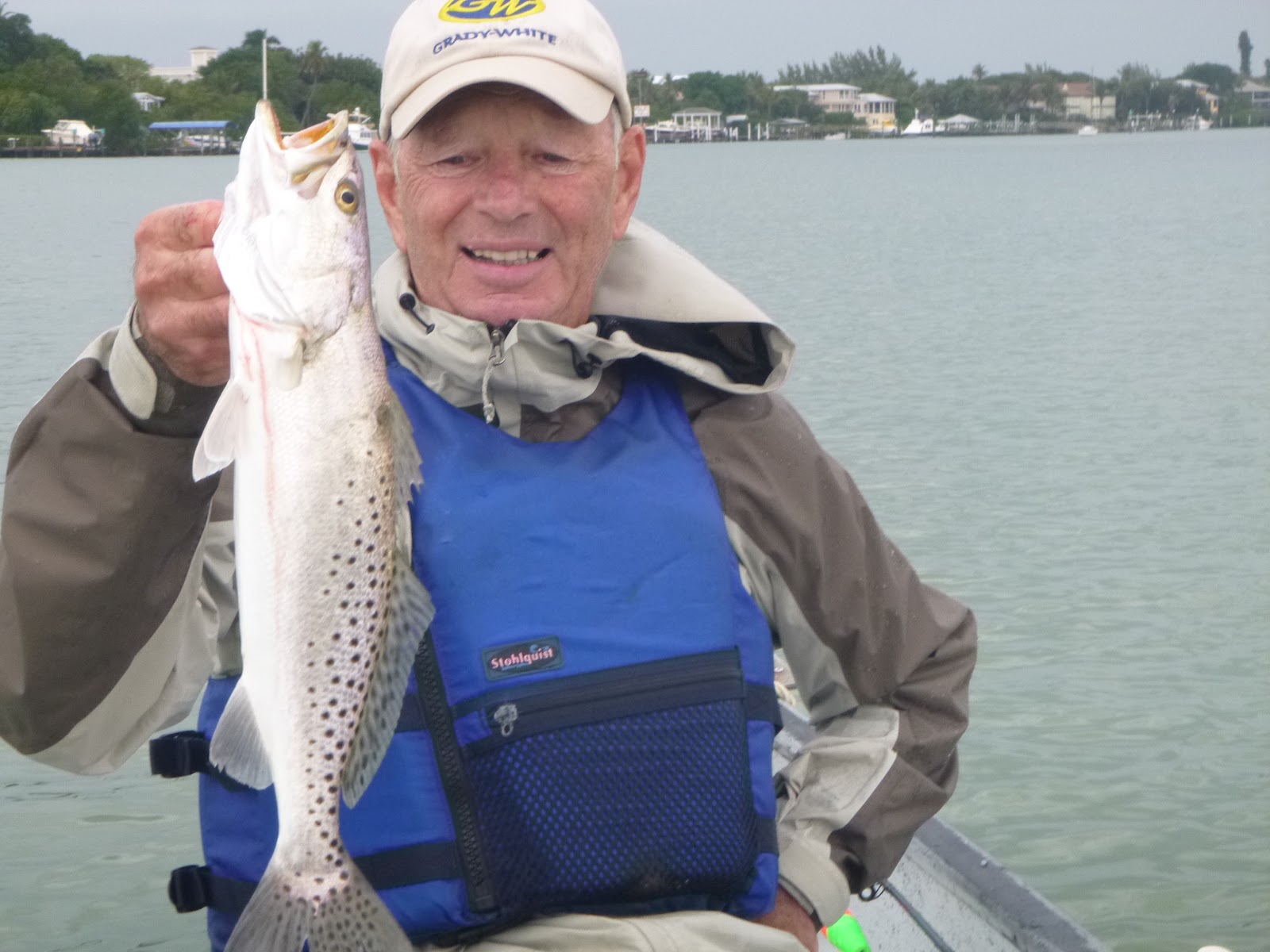
It took a while to locate the Trout but I tried a nice salt and pepper bottom with a channel edge on one side and a huge Turtle grass flat on the other. The Trout were really stacked up and they tore up our jig and plastics that we aggressively bounced off of the bottom. We boated a few dozen of these aggressive fish with several over 20". When the action slowed a bit we worked back over with a popping cork and shrimp and managed to boat fish every day we were out.
A cold front didn't stop us from from getting out there and working some fish.
Literally all of Florida is rimmed with intercoastal waterways and barrier islands that are brimming with inshore species to fish. One of the best things about this type of fishing is that anyone can use their freshwater bass or walleye tackle and a canoe or kayak to chase these fish down and catch them. They fight really hard and the scenery is hard to beat too.
Well, it's that time of year again. The 34th annual International Eelpout Festival in Walker is coming up quick. Where beer-bellied bumpkins battle for biggest Burbot. These fish thrive in the deep clear waters of walker bay. I like 20-40 foot deep humps or flats that break quickly into deep water. Fishing can be slow during the day, 6:00-9:00 pm is prime time for 'pout. A rattle spoon or minnow under cork will produce as good as anything. While most attendees won't actually fish, they may be missing out on one of our most under-rated sportfish. Good luck!
What is it about Crappies? Pure Joy I tell ya! If reeling in a slab doesn't put a smile on your face well...I wonder if you have any love for yourself at all? Anyway, I have a few ideas about how to ice the big floppa this winter.
A 2# chunk from Sunday.
First, one must fish lakes where big fish are. With most lakes it's: survey says......nnnngggggtt. Sadly, there just are not that many lakes left out there with catch able numbers of big-uns. Ninety percent of the lakes around have either been over harvested and contain stunted genetics or just don't have the habitat and forage base required to sustain big specs. Comb the MN D.N.R. Lakefinder website for lakes in your area that hold decent numbers of larger fish. Unless you have some great local intel (may require waterboarding) you could spend years finding your own honey hole. These surveys don't lie. Eventually you will find the lake that is more like: survey says....ding, ding, ding! Granted, there are lakes out there with huge crappies that just don't show up on the surveys but if they are on the survey, and it's a current one, then they are probably in the lake. And, the smaller the lake, the more faith you should put in the survey in my opinion.
Secondly, finding the fish in the lake. I believe the old adage that ninety percent of the fish are in ten percent of the lake, especially with crappies. So?..get maverick-ie and drill-baby-drill! Hole hopping is usually necessary, especially if you want big fish. Early in the season, a deep weed edge can be magic. As O2 depletes from the shallows weeds will die off. Unless you have really nice clumps of green coontail, the fish will eventually move out over deep water. If it's a deep lake, I would look for "confined open water" from 25'-50' deep and search there. In lakes with the deep basin topping out at 25-40 f.o.w., I would check the core of this basin first and then move toward the rim. Either way, the fish might be tight to the bottom or suspended, maybe even half way up the water column. Another place to check is the first real drop-off into deep water outside of a spawning area. Crappies will stage in these areas, especially in late season.
Finally, getting them to bite. Some die-hard crappie anglers will swear by the minnow while others prefer jigs or spoons tipped with waxies or plastic. I say, you really need both. For searching, a spoon or jig tipped with larva or plastic is usually the way to go. However sometimes a minnow is the only way to make old paper mouth open up. You might even have to experiment with weighted hooks, plain hooks, and split shot combos to seal the deal.
When you finally hit the mother-load, consider putting most of the big fish back in the lake. It's pretty satisfying slidin' a donkey back into the soup, knowing that next year you could have 15 or 16 inches of big floppa on the end of your line.
Walleye fishing on Walker bay is still pretty darn good with an ideal mix of eaters and bigger fish, though most of the bites are coming at prime time. I have had my best luck on 12'-18' flats near the deep break. Perch fishing is good too but you will have to do some sorting to find fish over 10". I like a shiner minnow or bigger rainbow minnow for Walleyes and if a Perch can get it in it's mouth it's probably a good one. Ice quality and thickness is good everywhere I have been. 12"-14" in most places.
If I look cold in this pic, it's because I was. Ten below zero with a -30 windchill.